
Our Solar Pumps are available in wide range of sizes and include submersible and surface types. Solar water pumps in Kenya use free sunlight to draw water from boreholes, rivers, or wells. Prices start at KES 85,000 for a 0.5 HP model (20m head, 4,000 L/hour) to KES 650,000 for 3 HP models (150m+ head, 18,000 L/hour)
If you’re considering switching to a solar-powered water pump system, you’re in the right place. Solar pumps are growing in popularity for farms, households, and off-grid sites because they have zero running cost and have low maintenance needs.
Call 0790719020
Complete Solar Pump System Requirements
- Pump unit (surface or submersible)
- Motor, pump body, housing, impeller, wiring to controller
- Example: Submersible pump for deep borehole may cost more because of high head, materials, sealing, motor design.
- Controller / inverter / MPPT unit
- Converts solar panel output to pump motor voltage/current (especially if AC motor or grid hybrid)
- Includes protections: dry run, over/under voltage, over-current
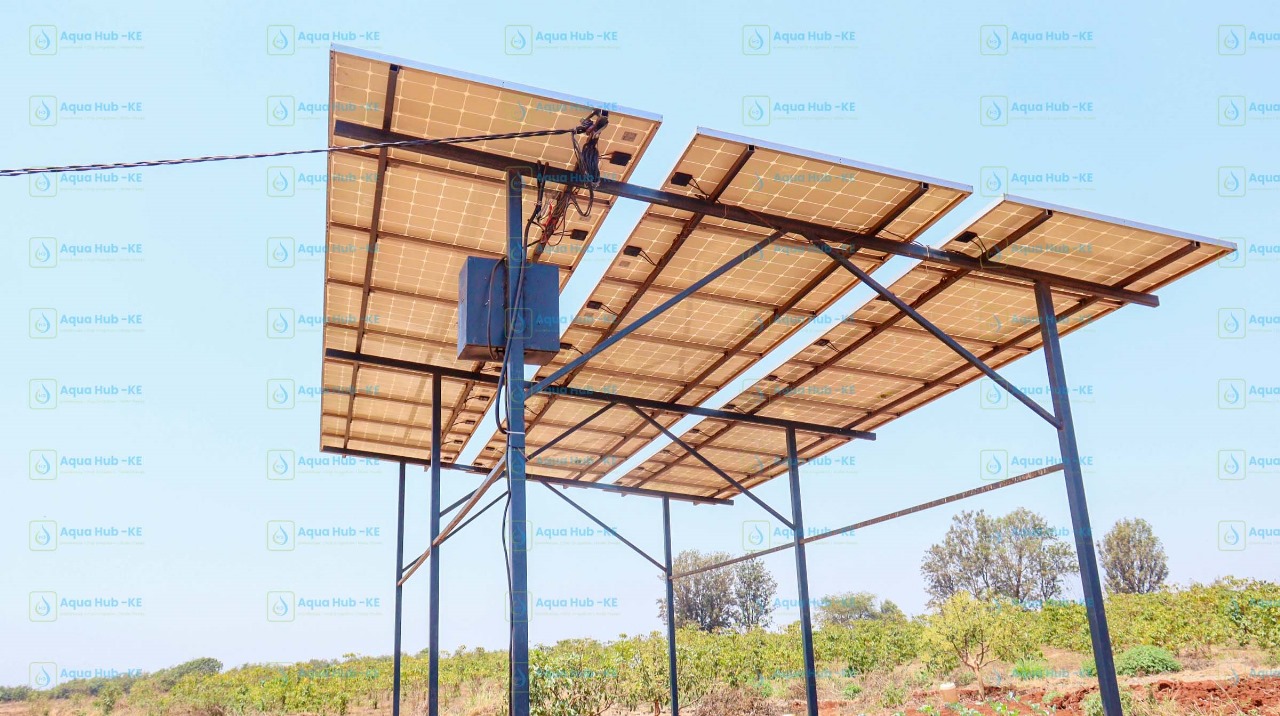
- Solar panels
- Panels sized to match pump power + losses + future buffer
- Mounting structure (roof-mount, ground-mount, pole-mount)
- Mounting hardware, tilt/azimuth setup, wiring from panels to controller
- Battery / backup system (optional)
- Batteries (lead acid, lithium), battery management system, wiring, charge controller, protection
- Backup generator or grid connection (hybrid) if required
- Water storage tank / elevated tank or pressure system
- Tank size depends on daily water requirement + buffer
- Elevated vs ground tank depends on your delivery system (gravity feed)
- Irrigation/distribution system
- Piping from pump to tank or directly to field
- Valves, filters, drip or sprinkler lines, manifolds, flow controls
- Fittings, filters, shut-off valves, backflow prevention
- Delivery piping & civil works
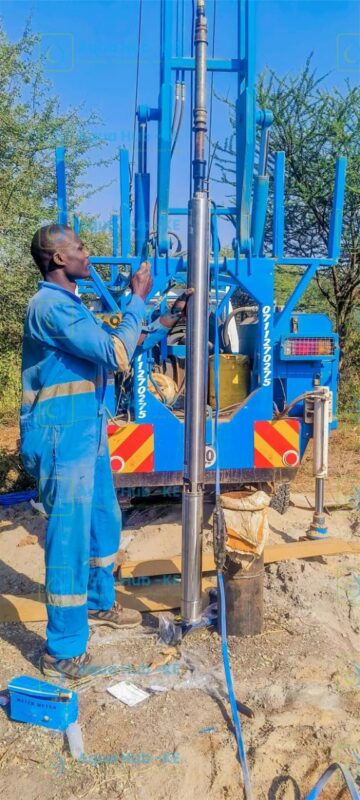
- Borehole casing (if submersible), trenching for wiring, trenching for pipes, mounting pad for pump/controller, fences/security, panel frames
How to Choose the Right Solar Pumps
Choosing the right solar pumps is not just about picking the most powerful pump. It’s about matching the right pump, panels, storage and controls to your site, water source, lift requirements and budget. Here’s a highly detailed guide with a checklist you can use.
Key factors to Consider when Choosing Solar Pumps
- Water source depth / suction & borehole details
- If you’re pumping from a borehole, you’ll need to know the depth of the borehole, the static water level, and the dynamic water level (after pumping).
- If you’re pumping from a shallow well, pond or open well, you’ll want to know the suction or lift height (distance from water surface to pump intake) and any restrictions.
- Total head and flow requirements
- Head means how high the pump must lift water (vertical lift + friction losses + other pressures).
- Flow is how much water you need per day, per hour or at peak. For example: if you need to irrigate a field or water animals, you’ll calculate litres/day.
- The pump you choose must be able to handle your required flow at your total head with some margin for safety and efficiency.
- Voltage, current and pump type
- Solar pumps may run DC or AC (with inverter). The solar array must match the pump’s voltage input (or the controller must convert).
- Also note whether the pump is surface (mounted outside water) or submersible (inside borehole). That affects wiring, installation and suitability.
- Solar panel size and configuration
- The solar panel size (in watts) and number of panels must support the pump’s power input (watts), considering sunlight hours, losses, wiring, etc.
- Also, panel orientation, tilt, shading, site latitude matter (especially in Kenya / East Africa).
- If you include battery backup, you’ll need extra panel capacity and battery capacity.
- Battery/storage & backup options
- If you want pumping when sun is weak/cloudy or at night, you’ll need a battery or hybrid system. Battery integration increases cost, complexity and maintenance.
- Choose battery capacity, voltage (matching pump/controller), depth of discharge, and ensure the solar panel array can charge the battery.
- Some solar water pump systems may allow direct coupling (sun → panels → pump) without battery (cheaper but sun-dependent).
- Ensure your controller supports battery charging/discharging or hybrid switching.
- Installation environment and durability
- Material matters: stainless steel or corrosion-resistant construction for pumps exposed to water with high mineral/salt content.
- For wells with high depth or abrasive water, motor and impeller design matter.
- Consider wiring, protection (dry-run, overload, overvoltage), dust, heat, inverter/controller enclosure.
- Climatic factors: Kenya has strong sun, but dust, high ambient temps, occasional heavy rain; ensure proper mounting, panel cleaning, wiring protection.
- Budget & availability of service/support
- A cheaper unit might save money upfront but be less reliable or harder to service locally.
- Ensure that locally you can get spare parts or service technician.
- Warranty matters (1-2 years or more).
- You might also consider supplier reputation and local installation knowledge.
Maintenance of Solar Pumps
- Clean the filter or inlet: Remove debris, silt, water impurities. For surface pumps operating on ponds, rivers or dams this is critical.
- Regular Inspection and Cleaning of Solar Panels: Dust, bird droppings, shading all reduce panel output which reduces pump performance.
- Wiring, clamps and connections: Check for corrosion, loose clamps, broken wires, signs of overheating.
- Motor and pump body inspection: Particularly for submersible pumps: check seals, cable insulation, bearings.
- Controller/inverter check: Ensure no fault codes, ensure that MPPT or pump controller is functioning.
- Pipework: Inspect for leaks, corrosion, valve/trap issues, protective covers.
- Annual service: Lubrication (if necessary), alignment, check for motor vibration, check for scaling or build-up.
Drawbacks of Solar Pumps and their Solutions
- Cloudy days: Since solar pumping depends on sunlight, output may vary. If you need consistent output, use larger panels, tank storage, or battery/alternate supply.
- Battery integration risks: Batteries add complexity: cost, lifespan, maintenance (cleaning, topping up if lead acid), deep-discharge issues, heat damage. We prefer lithium batteries. Also ensure proper ventilation and voltage protection.
- Corrosion and water quality: If your water source has high salinity, sand, silt, or is acidic/alkaline, the pump motor and casing may corrode or wear quickly. Choose stainless steel or corrosion-resistant materials explicitly.
- Dry-run damage: If the pump runs without water (especially submersible in borehole where water drops), motor damage or overheating can occur. Controllers should have dry-run protection
- Theft / vandalism: Panels, controllers, wiring, pumps are all exposed in rural areas. Secure mounting, locked boxes, fencing, camera/alarms are necessary.
- Downtime: If the system fails (pump motor fault, wiring fault, panel damage), you may lose water supply. Backup plan: have a small diesel/petrol backup pump, or grid-tied electric pump as fallback, or extra storage tank so you have supply while repair happens.
- Scaling / sediment build-up: Especially for boreholes with minerals, over time scaling inside pump or pipeline reduces flow and increases energy draw. Periodic cleaning or chemical treatment may be needed.
- Sump/pond fluctuations: If your water source is shallow and dries up seasonally, ensure you have enough water source or alternate source to avoid pump damage or insufficient supply.
Tips for reliable Water Supply Using Solar Pumps
- Oversize panels moderately (10-20 %) to allow buffer for cloudy days and system losses.
- Include a storage tank so you pump during sunny hours and store water for use through the day/night.
- Choose controllers with MPPT (Maximum Power Point Tracking) so you maximise solar panel output.
- Protect wiring and panels from animals, theft, damage.
- Plan for spare parts locally – e.g., extra wires, clamps, junction boxes, pump seals.
- Monitor performance monthly – if flow or panel output drops significantly, investigate early.
Case Study Story from Our Clients
A small farm in Kenya replaced a diesel pump for irrigation with a solar surface pump (1.5 kW) powered by solar panels. The result: zero fuel cost, lower maintenance, and reliable daily irrigation.
Key Takeaways
- Ensure you size the system right from the start (head + flow + sunlight) – mis-sized systems struggle.
- Storage tank is often very useful: even if you can’t pump at night, you pump during day and store water.
- Panels need good orientation and no shading – panels behind trees or buildings reduce output significantly.
- Having local technical support/installer made a big difference – troubleshooting wiring/panel issues quickly kept downtime minimal.
- Some farms used hybrid: solar + small grid/electric backup for rainy/cloudy periods – this gave peace of mind.
Installation steps
- Site survey: measure water table, borehole depth or well depth, tank elevation, sunlight map, shading.
- Design: select pump, panel size, location of panels, tank size, pipes, wiring route.
- Civil works: borehole drilling (if needed), mounting pad, panel frames, fencing/security.
- Electrical: panels to controller, controller to pump, wiring protection, earthing.
- Plumbing: connect pump to source, to tank/distribution, install valves/filters.
- Commissioning: run pump, test flow, test head, verify panels produce correct voltage/current under sunlight, train user on maintenance.
- Monitoring: optional sensors to track flow, panel output, pump run hours.
Latest Innovations in Solar Pumps Technology
MPPT Controllers & Smart Inverters
MPPT (Maximum Power Point Tracking) controllers ensure the solar panels are always operating at their optimal voltage/current point, maximising energy output. Many modern solar-pump kits integrate MPPT in the pump controller or inverter. Smart inverters may also allow grid/turbine backup, remote monitoring, IoT connectivity (so you can monitor flow, voltage, panel output from mobile).
For system owners this means higher efficiency, more output, better remote diagnostics.
Variable Speed Drives (VSD) / Variable Frequency Drives (VFD)
Instead of running the pump at full speed all the time, VSD/VFD allow the pump speed to vary in response to actual solar input or required flow. This improves efficiency (especially when sunlight is weak) and reduces wear.
For farms with variable demand (e.g., slower irrigation during certain hours) this is useful.
Hybrid Systems (Solar + Battery + Grid)
As battery technology (especially lithium) becomes advanced, solar pump systems increasingly integrate battery storage so pumping can continue during cloudy days or early morning/late evening.
Hybrid controllers allow switching seamlessly between solar, battery, grid or generator, improving reliability.
Some newer systems also allow input from grid as fallback (e.g., grid only when solar insufficient).
Remote Monitoring & IoT Integration
Sensors for flow rate, pressure, hours of operation, panel output, water levels in tank, solar insolation.
This allows you to spot drops in performance before major downtime.
Preventive maintenance alerts can be sent, reducing breakdowns.
Motor Technology
Brushless DC motors, better sealing, stainless steel components, corrosion-resistant coatings all help longevity especially in harsh environments. Improved motors allow deeper boreholes, higher lifts, better performance with smaller panel arrays.
Ecosystem Integration
Solar pumps are increasingly integrated into broader smart irrigation systems: drip irrigation, soil-moisture sensors, weather forecast integration, so water is pumped and distributed optimally, reducing waste and improving crop yield.
