
Rain Gun Sprinkler irrigation by Aqua Hub LTD covers an area of approximately 18 – 50 m wide. Rain Gun sprinkler price in Kenya starts from KES 8,000 to KES 37,000 with prices depending on size of the sprinkler.
Call 0790719020
Learn how rain gun sprinkler irrigation works and the overall cost, you won’t struggle watering crops that need high water volumes.
Rain Gun Sprinkler Price in Kenya
- 1 inch rain gun – KES 8,000
- 1 ½ inch rain gun – KES 13,000
- 2-inch rain gun – KES 20,000
- 2 ½ inch rain gun – KES 37,000
Invest in Rain Gun Sprinklers
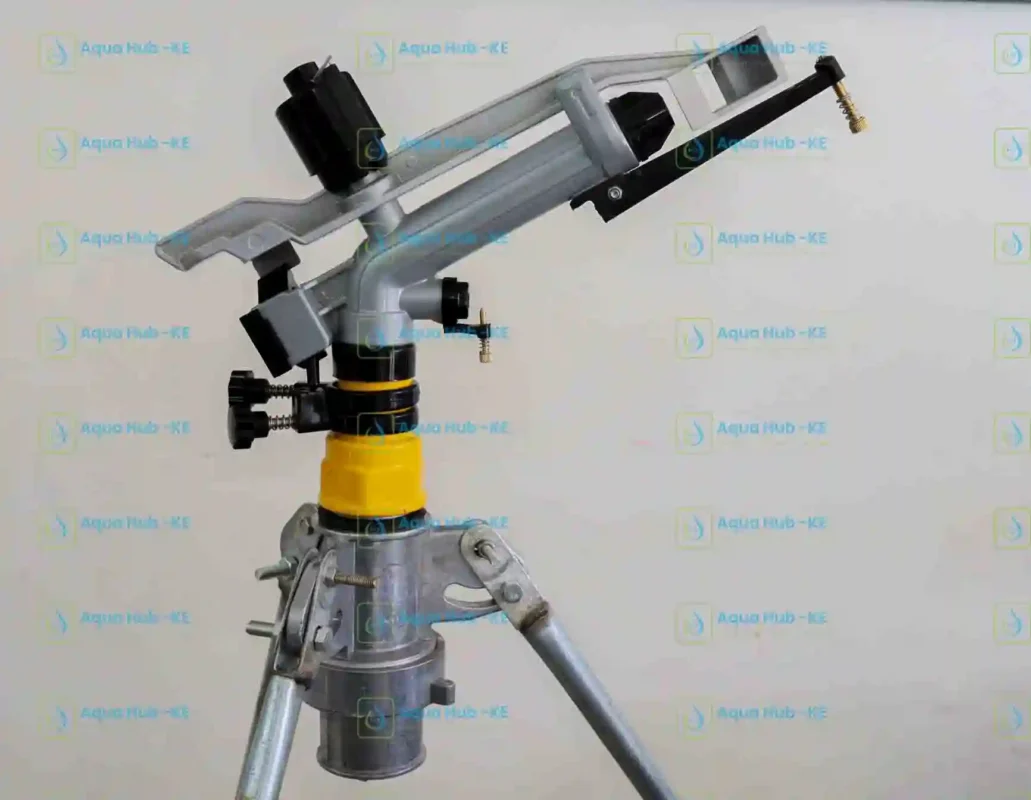
Your crops don’t have to die anymore because of insufficient rainfall. With a reliable dam or river water, it is possible to water crops efficiently using rain gun sprinklers.
A rain gun sprinkler irrigates crops by spraying sufficient water on crops while covering a large farm section. It delivers uniform irrigation, saves water, and boosts crop yield all while reducing labour costs.
Rain gun sprinklers are used for a wide variety of crops including maize, vegetable, coffee, and sugarcane. For that reason, it can be used as a movable system to different plantations in your farm.
Cost of Rain Gun Sprinklers in Kenya
Prices vary depending on the brand, size, and quality of the system.
1-inch rain gun sprinkler costs between KES 7,000 and 8,500. This includes the nozzle but not the stand or hosepipes. For larger models like 1.5-inch or 2-inch, prices range between KES 9,000 and KES18,000, depending on the brand.
Tripod stands and accessories cost an additional KES 2,000, while complete irrigation kits that include the pump, pipes, and connectors can go for KES 55,000 to KES 65,000 depending on farm size.
In Kenya, the most trusted supplier is Aqua Hub Kenya, known for providing high-quality and affordable rain gun sprinklers suitable for both small and large farms. They also offer installation support and irrigation design services, making the process easier for farmers.
Specifications of Rain Gun Sprinklers
Rain guns come in different sizes and specifications depending on the area you want to irrigate and the available water pressure. The most common sizes in Kenya are 1-inch, 1.25-inch, 1.5-inch, and 2-inch models. The “inch” refers to the nozzle size or water inlet size of the rain gun.
A 1-inch rain gun is ideal for small farms or gardens. It delivers a spray radius of 12m and works best at moderate pressure. It’s easy to set up, portable, and perfect for vegetable farmers or those with limited water sources.
The 1.5-inch rain gun is a more powerful option used on medium farms. It can irrigate a distance 15m radius at a time, depending on water pressure and nozzle size. It’s suitable for crops like maize, coffee, or sugarcane.
For large-scale irrigation, the 2-inch rain gun is the top choice. It can spray water up to 25 meters in radius, covering more than an acre per setup. These are commonly used in plantations, large commercial farms, or for dust suppression in construction sites.
Most rain guns are made of durable materials like aluminium or brass, which ensures long life even under tough outdoor conditions. The rain gun is mounted on a tripod stand which offers a firm stability to remain standing during the high-pressure water discharge.
How Rain Gun Sprinklers Irrigate Crops
A rain gun sprinkler works by using water pressure to shoot a fine spray of water across a wide area, much like heavy rainfall. The system is connected to a pump installed near the water source such as a tank, river or dam. The water is delivered through pipes to the rain gun, which is usually mounted on a tripod stand or a riser.
Once the water reaches the nozzle, it’s released at high pressure, spreading evenly across the farm. Most rain guns rotate automatically, ensuring that every part of the field gets water. The rotation can be adjusted to spray in a full circle or half circle depending on your farm’s shape or layout.
Because of the high pressure they use, rain guns can cover much larger areas than small sprinklers. For example, a 1-inch rain gun can irrigate between a quarter to half an acre in a single setup, depending on the pressure and nozzle size. This makes them ideal for medium to large farms.
The result is a gentle rain-like effect that allows the soil to absorb water slowly, reducing erosion and runoff. Compared to traditional flood irrigation, rain guns save water and energy while ensuring crops get the moisture they need evenly.
Top Benefits of Rain Gun Sprinkler Irrigation
Rain gun sprinklers are water efficient. The system uses less water than flood irrigation because it controls how and where the water is distributed. This makes it ideal for areas facing water scarcity or where water pumping costs are high.
Another major advantage is uniform water distribution. The fine spray ensures that every plant gets an equal amount of water, leading to healthier crops and higher yields. Uneven watering often causes poor germination or uneven growth, but rain guns solve this problem perfectly.
Rain guns are also versatile. You can use them to irrigate a wide range of crops — from maize and sugarcane to coffee and vegetables. They’re also great for watering pasture, making them useful for livestock farmers as well.
Maintenance is simple. There are no complicated parts, and cleaning the nozzle or adjusting the spray angle is quick and easy. Plus, since rain guns are portable, you can move them from one section of the farm to another without needing a fixed setup.
Finally, rain guns can help reduce labor costs. Once the system is installed, one or two people can manage a large field easily. You won’t need to spend hours dragging pipes or watering manually anymore.
Rain Gun Sprinkler Irrigation: Recommended Crops
They are perfect for maize, beans, wheat, and sugarcane because these crops thrive under uniform watering.
They also work great for coffee and tea plantations, especially during dry spells when regular rainfall isn’t enough.
For vegetable farmers growing cabbage, spinach, tomatoes, onions, or kale, rain guns provide the soft, natural rain effect that these crops love without damaging tender leaves.
Pasture and fodder crops like Napier grass also do well with rain gun irrigation. Dairy farmers use the system to maintain green feed throughout the year, ensuring their cows always have nutritious grass.
Guide for Setup and Installation of a Rain Gun Sprinkler System
The first step is to identify your water source. This can be a borehole, well, river, or storage tank. Make sure the source can provide enough water pressure most rain guns need between 2 and 6 bars of pressure to work effectively.
Next, connect your pump to the water source and attach a main delivery pipe. This pipe carries water to the location of your rain gun. From there, connect the rain gun to the pipe using a riser or a tripod stand. The stand makes it easier to adjust the height and angle for maximum coverage.
After installation, test the system by running water through it. Adjust the nozzle angle and rotation speed so that the water spreads evenly without overshooting your field. If your land is sloped, install multiple rain guns at different levels to ensure even irrigation.
For best results, irrigate early in the morning or late in the evening when evaporation rates are lower. This helps conserve water and ensures more of it reaches the roots of your crops.
A professional installer, such as one from Aqua Hub Kenya, can help design the system layout and ensure that your pressure, pipe size, and nozzle settings are correct.
Challenges with Rain Gun Sprinkler Irrigation and Solutions
Like any system, rain gun irrigation has its challenges. One common issue is uneven pressure. If your water pump is too small, the rain gun may not spray evenly. The solution is to use a pump with the correct pressure rating or add a pressure regulator.
Another issue is wind interference. In windy areas, the spray may drift away from your crops. To reduce this, irrigate during calm hours early morning or late evenin.
Clogging can also occur if the water has a lot of dirt or sand. Installing a filter before the pump helps prevent this problem and keeps your nozzle clean.
Where to Buy Rain Gun Sprinklers in Kenya
Finding a reliable supplier is key to getting good results from your rain gun system. In Kenya, Aqua Hub Kenya is one of the leading suppliers of quality irrigation equipment, including rain guns, pipes, and accessories. They offer a variety of sizes and brands, along with expert guidance on system design and installation.
Call 0790719020 to order
Frequently Asked Questions
1. How do rain gun sprinklers differ from other sprinklers?
Rain guns cover a larger area and operate under higher pressure than regular sprinklers. They produce a rain-like spray that mimics natural rainfall, while smaller sprinklers have limited reach and lower flow rates.
2. How much area does a 1-inch rain gun irrigate?
A 1-inch rain gun can irrigate an area approximately 18 – 20m wide depending on the water pressure, nozzle size, and wind conditions.
3. What is the required pressure for rain guns?
Most rain guns work best at 2 to 6 bars of pressure. Always check your pump rating to ensure it can provide enough pressure.
4. Are rain guns suitable for small farms?
Yes, smaller models like the 1-inch rain gun are ideal for small farms. They’re portable, affordable, and easy to use.
5. How much does a rain gun sprinkler cost?
Prices in Kenya range between KES 8,000 and KES 37,000 depending on the size and brand. Complete systems with pipes and pumps will cost more.
6. What is the maintenance for rain gun sprinklers?
Maintenance mainly involves cleaning the nozzle regularly, checking for leaks, and ensuring the filters are not blocked. This keeps the spray consistent and prevents damage.
7. Can rain gun sprinklers save water compared to flood irrigation?
Yes. Rain guns are more water-efficient because they distribute water evenly and reduce runoff. They can save up to 30% more water than traditional flood irrigation.
8. Which crops are best irrigated with rain gun sprinklers?
They work best for maize, beans, sugarcane, coffee, vegetables, and pasture. Most field and fodder crops do well with rain gun irrigation.
9. Are there portable rain gun sprinklers?
Yes. Many rain guns come with lightweight tripod stands that make them easy to move from one section of the farm to another.
10. What are the top brands of rain gun sprinklers in Kenya?
PY40, and Rain bird sprinklers known for durability and strong performance.
