
Top-quality pond liners are available at Aqua Hub LTD at customer-friendly prices. To order or get more information,
Call 0790719020
Pond Liners in Kenya
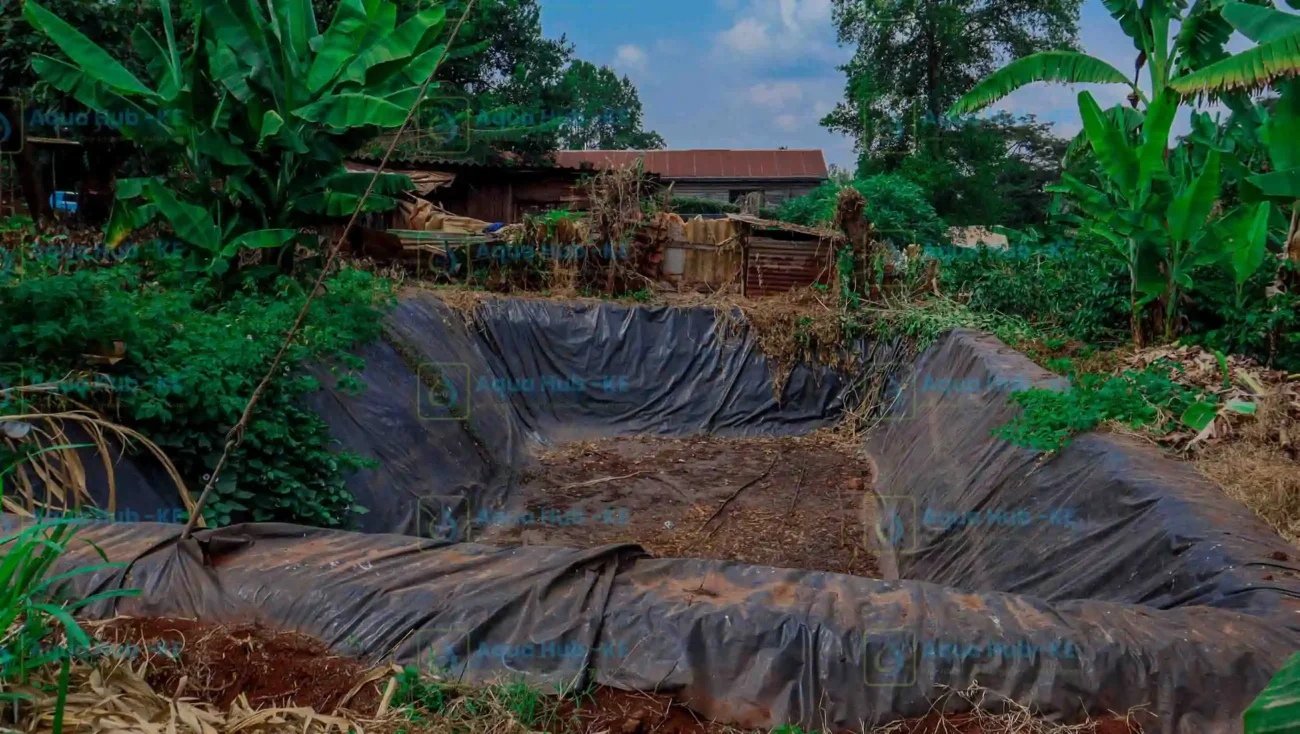
Pond liners are impermeable sheets of material placed on the bottom and sides of ponds or water pans to prevent water from seeping into the ground. In arid regions of Kenya, liners serve as a critical water storage solution for irrigation farming, drought-proofing crops and ensuring reliable water availability during dry seasons.
How Pond Liners Work
The liner acts as a barrier that holds water in reservoirs, fishponds, and irrigation dams. By sealing the soil, it prevents water from escaping through porous ground, making pond liners especially important where natural soil retention is poor.
Benefits of Using Pond Liners
Installing a pond liner offers multiple advantages. They include:
- Improve Water Conservation: Liners dramatically reduce water loss from seepage.
- Enhances Fish Farming: Supports integrated systems where water pans serve dual purposes: irrigation and aquaculture.
- Reduces Soil Erosion: Keeps soil structure intact around ponds.
Types of Pond Liners
Selecting the right material impacts longevity and performance.
HDPE Liners
- HDPE is the most common liner material in Kenya. It is popular for its durability, puncture resistance, and UV tolerance.
- HDPE is more preferred for both fishpond and irrigation reservoirs because it is highly resistant to degradation.
PVC Liner
- PVC liners are cheaper but less durable under prolonged UV exposure.
- LDPE can be flexible but is generally not as long-lasting as HDPE.
Pond Liner Specifications
Thickness
Thickness is measured in millimetres (mm). Common sizes include:
- 0.3mm: For smooth, soft soil.
- 0.5mm: Standard choice for general ponds and small irrigation pans.
- 0.75mm: Medium-duty use.
- 1.0mm: Heavy-duty, rocky soils, large reservoirs.
Roll Size
Most Pond liners are packaged in 8 m by 100m sizes.
Tensile Strength
Higher tensile ratings indicate stronger liners that can withstand stretching without tearing — critical in large farms.
Choosing the Right Pond Liner Thickness
The right thickness depends on:
- Pond size and depth
- Soil type
- Expected wear
For rough or rocky fields, go for thicker liners (0.75–1.0mm). For smooth earthen pans, lighter options may suffice.
Pond Liner Roll Measurement Calculation
Use this simple formula:
Required Length = Pond Length + (2 × Depth) + 1 m overlap allowance
Required Width = Pond Width + (2 × Depth) + 1 m overlap allowance
Additional overlap or allowance is for extra for anchorage at the edges. Accurate measurements save on cost and reduce waste.
Where to Buy Pond Liners in Kenya
Aqua Hub Kenya. Call 0790719020
How to Install Pond Liners
Proper installation ensures maximum life:
- Prepare Site: Remove rocks, roots, and sharp debris.
- Level Ground: Smooth out soil and, if possible, add a sand/geotextile underlay.
- Lay the Liner: Unroll and position, ensuring enough overlap at edges.
- Anchor Edges: Use soil, stones or concrete blocks.
Proper planning at this stage reduces leakage and future repairs.
How to Join Pond Liners
Where one roll of dam liner is not sufficient to cover the pond, several liners are jointed to form one sheet.
Common methods of joining pond liners are:
- Heat-Welding: method of joining HDPE pond liners using a hot welding blower and a roller.
- Seaming Tapes: Alternative where welding is not feasible.
Joining should be done by experienced technicians to prevent leaks.
How to Repair Pond Liners
Minor leaking surfaces or holes in a pond liner can be repaired by:
- Patch Kits: For minor punctures.
- Heat-Welding: Best for larger tears.
- Replacement: If damage is extensive or seams start to fail.
Pond Liner Maintenance Tips
- Keep sharp tools/rocks away from exposed liner.
- Cover edges to reduce UV degradation.
- Clean debris regularly.
- During dry seasons, monitor moisture around liner edges to prevent shrinkage.
Cost of Pond Liners in Kenya
Dam liners prices are determined by the thickness size and pond liner type.
| Thickness | Cost (KES/m²) |
| 0.3 mm | 150–200 |
| 0.5 mm | 220–230 |
| 0.75 mm | 320–340 |
| 1.0 mm | 420–450 |
Additional costs include installation and welding.
Alternative Uses of Pond Liners
Pond liners are also suitable for other applications. They include:
- Water harvesting – for domestic uses at home or residential areas.
- Concrete tank lining – to prevent water leakage in concrete tanks. Seals the cracks or holes that occur in old concrete.
- Irrigation farming – to line reservoirs and store water for irrigation in farms.
- Crab farming – ideal for keeping water in ponds for rearing crabs and oysters.
- Lining corrugated iron tanks – pond liners are used to store water by covering steel frames to form a tank.
- Construction sites – safety mats in construction sites.
- Sewage waste containment – to prevent soil contamination and leakage of sewage water.
- Water treatment plants – handling waste in treatment plants.
Frequently Asked Questions
1. What pond liner thickness is the best?
1.0mm HDPE liner is highly reliable and long lasting.
2. How do I prepare the pond for a liner?
- Levelize the surface and remove rocks and roots.
- Add a Protective underlayment layer of sand
- Make a ditch 1 fit around the pond. Ensure the ditch is 1m deep to anchor the liner firmly.
3. Can I join pond liner rolls for larger pans?
Yes. By using a welding machine.
4. How do I repair a damaged pond liner?
By welding using a hot welding
5. Are pond liners waterproof?
Dam liners are designed to prevent leakage.
6. How long do pond liners last?
15 – 50 years.
7. What size pond liner roll should I buy?
It depends on the size of your pond
8. Can I install a liner myself?
Yes but proper installation requires technical support.
9. How do I calculate what size pond liner I need?
Use this simple formula:
- Required Length = Pond Length + (2 × Depth) + 1 m overlap allowance
- Required Width = Pond Width + (2 × Depth) + 1 m overlap allowance
10. Where can I buy pond liners in Kenya?
Aqua Hub Kenya
