
Explore wide range of efficient Irrigation systems in Kenya designed and installed by Aqua Hub Kenya. We install drip irrigation kits, sprinklers, rain hose systems, button drippers and rain gun sprinklers.
We customize our irrigation kits based on the crop requirements of our farmers.
Call 0790719020
Quick Takeaways
- Drip irrigation is the most water-efficient irrigation system in Kenya.
- Sprinkler irrigation is ideal for large farms and pasture management.
- Drip Irrigation system in Kenya ranges from KES 130,000 to KES 180,000 per acre.
- Solar-powered irrigation is becoming popular due to rising fuel and electricity costs.
- Proper irrigation design reduces water wastage and improves crop yields.
- Small-scale farmers are increasingly adopting affordable irrigation kits.
- Choosing the right irrigation system depends on crop type, water source, soil, and budget.
Why Irrigation Is Important in Kenya
Irrigation is the artificial application of water to crops to support plant growth when rainfall is insufficient.
In Kenya, irrigation has become essential because climate change has disrupted traditional rain-fed farming patterns.
Types of Irrigation Systems in Kenya
Drip Irrigation System
Drip irrigation delivers water directly to the plant root zone through pipes and emitters. This method minimizes water wastage and improves fertilizer efficiency.
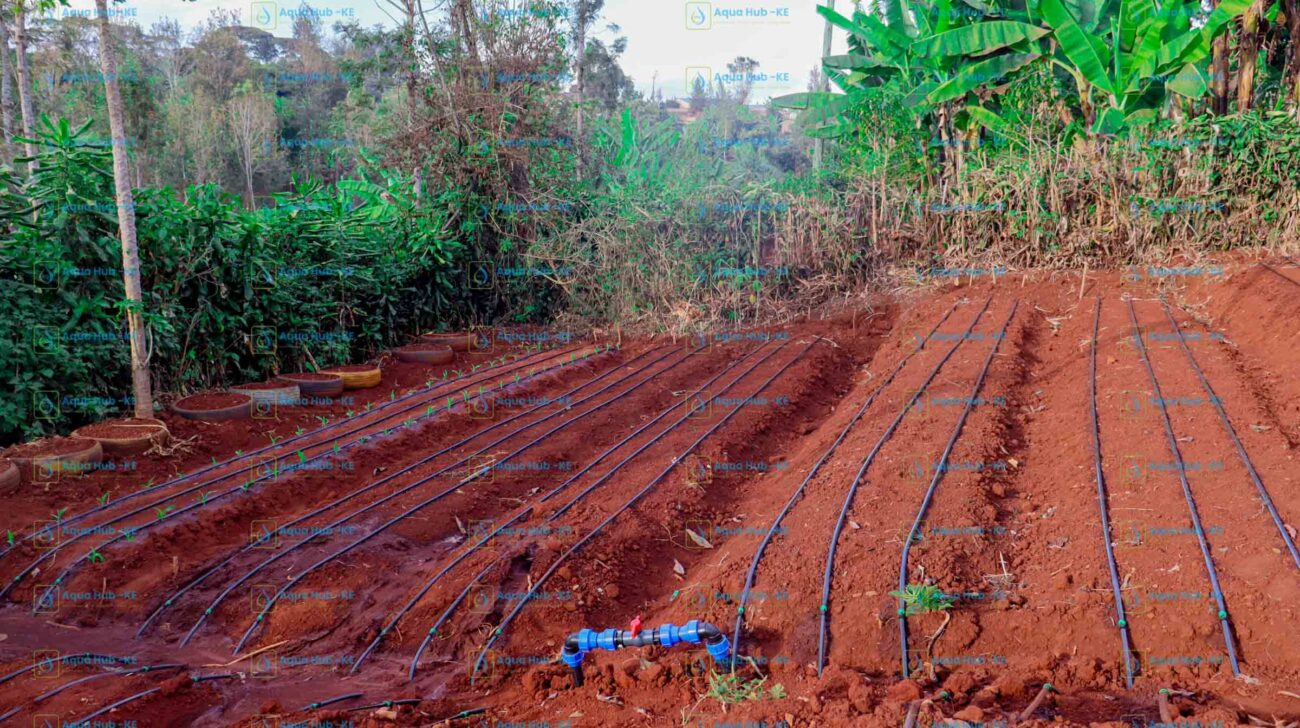
Advantages of Drip Irrigation
- Saves water
- Reduces weed growth
- Minimizes fungal diseases
- Suitable for greenhouse farming
Best Crops for Drip Irrigation
- Tomatoes
- Capsicum
- Watermelons
- Cucumbers
- Strawberries
Drip irrigation is widely used in greenhouse farming and commercial vegetable production.
Sprinkler Irrigation Systems
Sprinkler irrigation sprays water across crops using pressurized pipes and rotating sprinklers.
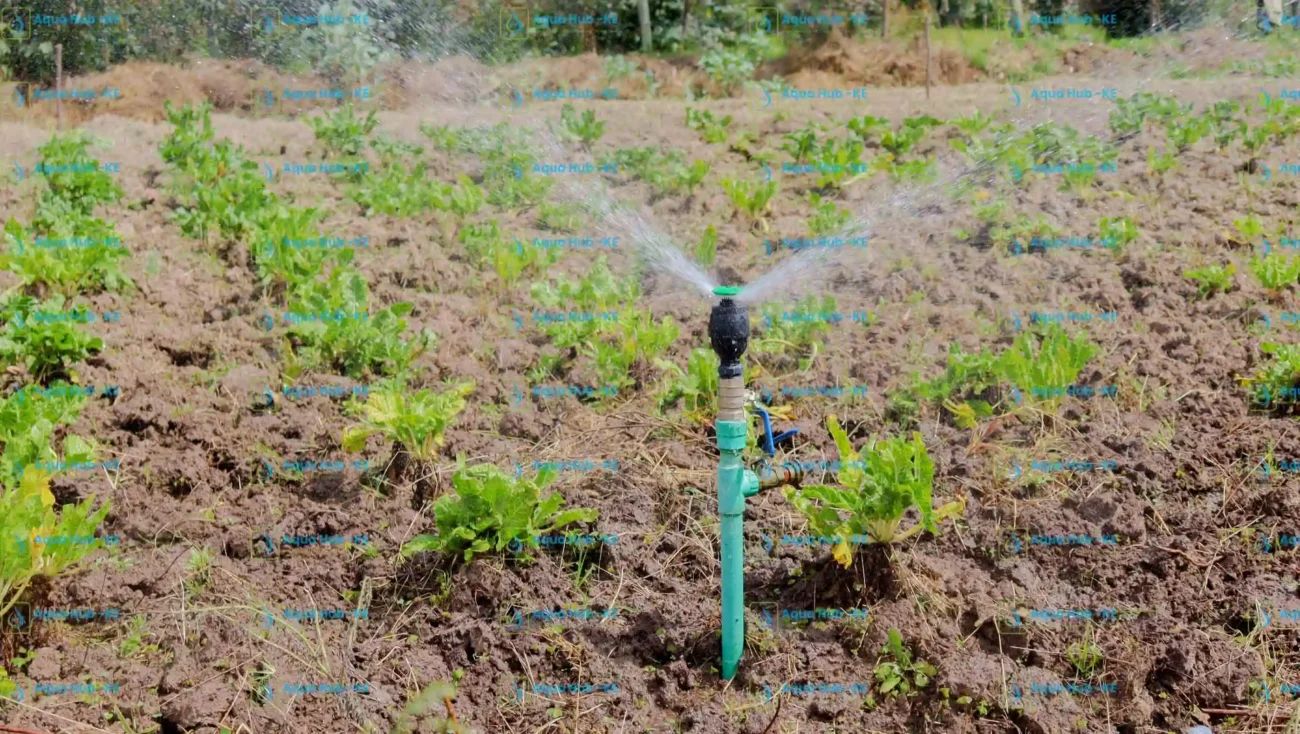
Benefits of Sprinkler Irrigation
- Covers large areas
- Suitable for uneven land
- Reduces soil erosion
- Easy to automate
Crops Irrigated Using Sprinkler System
- Pasture irrigation
- Maize farming
- Vegetables such as kales, swiss chards and cabbages.
- Lawn fields.
Button Drippers
Button drippers use small plastic button drippers to water plants in a slow and steady sprays near the root zone. It uses a PE pipe with button drippers spaced evenly on the pipe laid along the plant line.
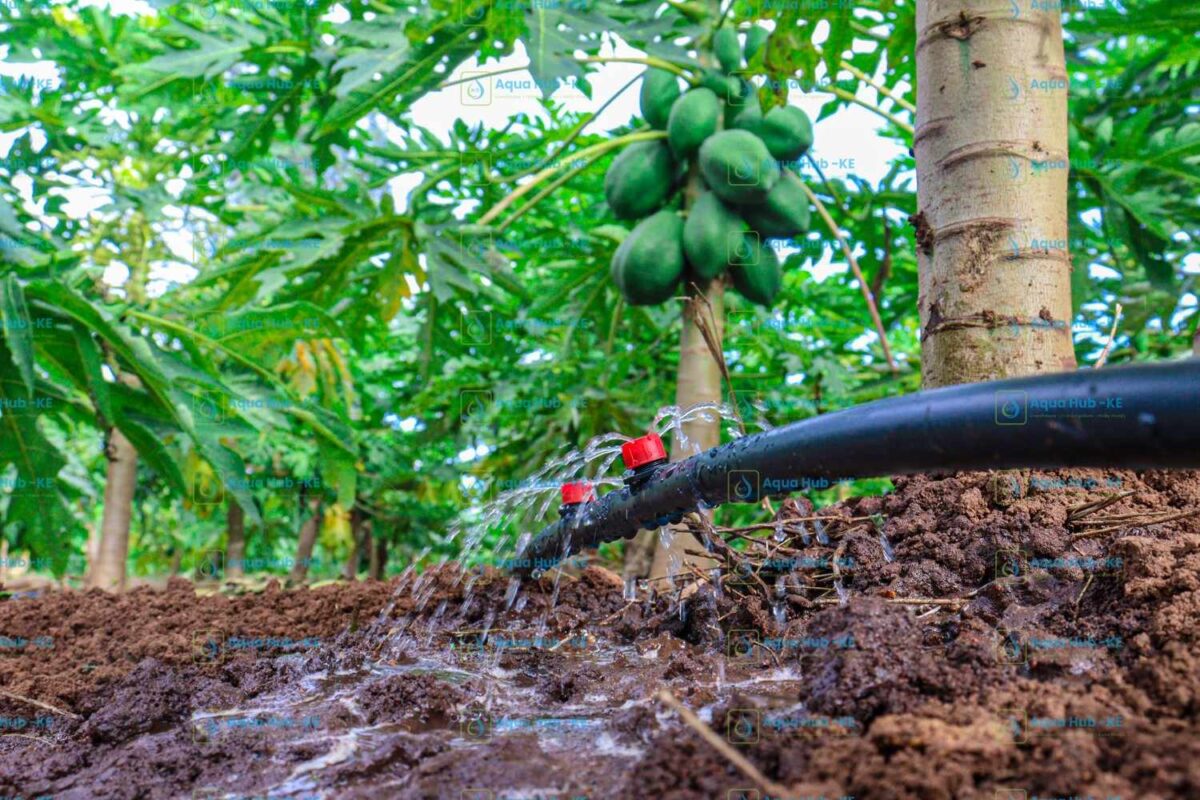
Suitable Plants
- Avocado fruits
- Mango trees
- Papaya trees
- Citrus fruit
- Tree seedlings
Solar-Powered Irrigation Systems
Solar irrigation systems use solar energy to power water pumps required to move water for irrigation farming.
Advantages of Solar Powered Irrigation Systems
- Cheaper to
- Low maintenance
- Suitable for off-grid farms
- Environmentally friendly
Cost of Irrigation Systems in Kenya
The cost of irrigation systems depends on the farm size, automation and crops to irrigate. Common irrigation systems cost as follows:
| Irrigation System | Estimated Cost per acre |
| Drip Irrigation System | KES 130,000 – 180,000 |
| Sprinkler irrigation system | KES 80,000 – 250,000 |
| Rain Hose Irrigation System | KSh 120,000 – KES 200,000 |
Which Irrigation System Should I Use?
Choosing the right irrigation system depends on several factors.
Consider Your Crop Type
Different crops require different irrigation methods. Common crops are suitable for irrigation methods shown below:
| Crop | Recommended Irrigation |
| Drip Irrigation | Tomato, capsicum, strawberries, vegetables, onions, garlic and cucumbers |
| Button Drip irrigation | Coffee, avocado trees, citrus, mango and apple trees. |
| Sprinkler Irrigation | Vegetables, garlic, potatoes, watermelons, sugarcane, cotton, bharley, tree seedlings,sorghum and millet. |
| Rain Hose Irrigation | Fodder, napier grass, lucerne, moringa, vegetables, French beans. |
| Furrow Irrigation | Rice, sweet potatoes |
Evaluate Water Availability
Farmers with limited water should prioritize drip irrigation because it conserves water efficiently.
Consider Farm Size
Small farms may benefit from affordable drip kits while large commercial farms may require automated systems.
Analyze Soil Type
Sandy soils lose water quickly and often require controlled irrigation systems.
How to Install Drip Irrigation in Kenya
- Identify Water Source
- Prepare the Farm Layout
- Install Main Pipes: Connect the mainline from the water source to the field.
- Install Drip Lines
- Test the System: Check pressure levels and inspect for leakages.
How to Install Sprinkler Irrigation Systems in Kenya
- Design the irrigation layout
- Install pump system
- Lay pipes
- Connect sprinklers
- Test pressure distribution
Common Irrigation Mistakes Farmers Make
Many irrigation systems fail due to poor planning.
Overwatering Crops
Too much water can cause:
- Root rot
- Nutrient leaching
- Fungal diseases
Poor Filtration
Dirty water can clog irrigation emitters and reduce efficiency.
Wrong Irrigation Timing
Midday irrigation increases water loss through evaporation.
Benefits of Irrigation Systems in Kenya
Modern irrigation offers major advantages for Kenyan farmers.
Increased Productivity
Farmers can produce crops consistently throughout the year.
Water Conservation
Drip irrigation reduces water wastage significantly.
Reduced Labor Costs
Automated systems reduce manual watering labor.
Higher Profits
Dry-season farming often attracts premium market prices.
Challenges with Irrigation Systems in Kenya
High Initial Costs
Modern irrigation systems can be expensive for small-scale farmers.
Water Scarcity
Some regions experience severe water shortages during dry seasons.
Limited Technical Knowledge
Improper installation often leads to poor irrigation performance.
Rising Equipment Costs
Imported irrigation accessories are becoming more expensive due to inflation and currency fluctuations.
Best Crops for Irrigation Farming in Kenya
Vegetables
- Tomatoes
- Onions
- Kale
- Spinach
Fruits
- Watermelons
- Strawberries
- Passion fruits
- Avocados
Cash Crops
- Coffee seedlings
- Macadamia seedlings
Irrigation allows farmers to target high-value crops throughout the year.
Where to Buy Irrigation Systems in Kenya
Aqua Hub LTD.
Frequently Asked Questions
1. Which is the best irrigation system in Kenya?
Drip irrigation. It saves water and improves fertilizer efficiency.
2. How much does drip irrigation cost in Kenya?
Small drip irrigation kits start from around KSh 15,000 while larger systems can cost over KSh 200,000.
3. Is sprinkler irrigation suitable for vegetables?
Yes. Sprinkler irrigation works well for vegetables.
4. What crops perform best under irrigation?
Tomatoes, onions, capsicum, cucumbers, strawberries, and watermelons perform very well.
5. Can solar power be used for irrigation?
Yes. Solar-powered irrigation systems are cheaper to operate.
6. What is the cheapest irrigation method?
drip irrigation.
7. How often should crops be irrigated?
Irrigation frequency depends on crop type, soil, and weather conditions.
8. Do irrigation systems require maintenance?
Yes. Regular cleaning, filter checks, and leak repairs improve system performance.
9. Is irrigation profitable in Kenya?
Yes. Irrigation allows year-round farming and access to high off-season market prices.
10. Where to buy irrigation equipment in Kenya?
Aqua Hub Kenya.
