
Insect nets by Aqua Hub are manufactured from UV treated fabric material which is tough against sunlight exposure. Cost of insect nets in Kenya vary with the dimensions: 2.5 by 50 m, 3 by 50 m and 3.5 by 50 m.
Call 0790719020
Quick Takeaways
- Insect net prices in Kenya range from KES 60-250 per square meter, depending on mesh size, quality, and UV treatment specifications
- Installation costs add 30-50% to material costs, making proper planning essential for budget management
- High-quality nets with 50-mesh density offer the best protection against thrips, whiteflies, and aphids for premium crops
- Return on investment typically occurs within 1-2 growing seasons through reduced pesticide costs and higher yields
- Local suppliers like Aqua hub Kenya offer competitive pricing with installation services included
- Proper maintenance extends net lifespan to 5-7 years, significantly reducing long-term costs per growing season
- Government subsidies through county agricultural offices can reduce initial investment by up to 40%
Introduction
Farmers often incur high cost of buying pesticides to control aphids, whiteflies, thrips and other pests that affect crops. Insect nets are a better low-cost alternative solution to get rid of pest that attack tomato, peppers, vegetables and other crops. The cost of insect nets is from KES 60 – KES 120 per square metre but varies with roll size and quality. Detailed information on the cost and use of insect nets is essential for farmers to get quality and top yield.
Understanding Insect Nets for Agricultural Use
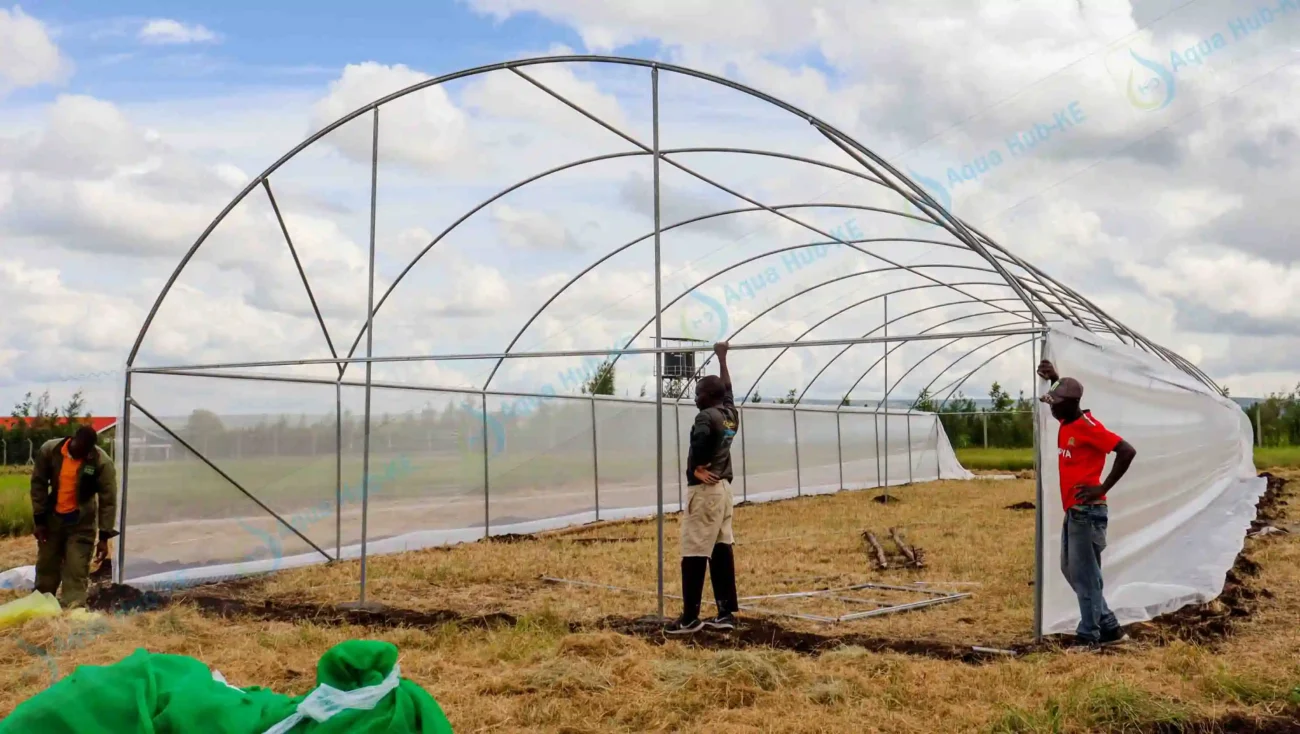
Aphids, stalk borers, cutworms, thrips and weevils are the major cause of lower yield in agriculture. These pests and insects feed on leaves, stems, grains and fruits significantly reducing the yield and affecting the quality.
Insect nets are used to make a physical barrier that denies such pests and insects from accessing the crop fields or environment. Its structure enhances proper air circulation, light penetration and rain inside the growing space. Because of this design your crops get the right growing needs. Field crops and greenhouse environments require both insect nets and pesticides to control pests.
The effectiveness of insect netting depends primarily on the mesh size, which is measured by the number of holes per square inch. For Kenyan farmers growing tomatoes, peppers, and other vegetables, understanding this specification is crucial because different pests require different mesh densities for effective exclusion. Additionally, quality insect nets incorporate UV stabilizers that prevent degradation under intense tropical sunlight, ensuring your investment lasts multiple growing seasons.
Farmers across Central Kenya, Rift Valley, and coastal regions have increasingly adopted insect nets as part of integrated pest management strategies. This shift reflects growing awareness about pesticide resistance, export market requirements for reduced chemical residues, and the economic benefits of preventing rather than treating insect infestations.
Cost of Insect Nets in Kenya (2025)
The cost of insect Nets in Kenya is from KES 60 to KES 120 depending on the roll size, mesh size and quality.
Factors the Cost of Insects in Kenya
Mesh size density determines the price, with finer meshes requiring more material and precise manufacturing. Nets with 25-mesh density (suitable for larger insects) cost considerably less than 50-mesh or 80-mesh variants needed for controlling tiny pests like thrips and whiteflies. Farmers must balance the need for pest exclusion against budget constraints and crop-specific requirements.
UV treatment quality directly impacts both price and longevity, making it a critical consideration for Kenyan conditions. Basic UV treatment might last 2-3 years before the net begins deteriorating, while advanced photo stabilizers can extend useful life to 7 years or more. When calculated on an annual cost basis, premium UV treatment often proves more economical despite higher upfront investment.
Brand reputation and country of origin also affect insect net prices significantly. Israeli and European manufacturers typically charge premium prices justified by stringent quality control and proven field performance. Chinese manufacturers offer more competitive pricing with varying quality levels, requiring careful supplier vetting and potentially requesting sample testing before large purchases.
Color selection may seem superficial but impacts both pest behavior and crop growth patterns. While white nets generally cost less, some suppliers charge premiums for colored variants that specific research suggests may enhance pest deterrence or modify light spectrum beneficially for certain crops.
Types of Insect Nets in Kenya
Standard Anti-Insect Mesh
Standard anti-insect nets have uniform mesh holes ranging from 0.4mm to 1.5mm spacing. Most vegetable farmers choose 50-mesh variants that effectively block aphids, whiteflies, and moths.
The versatility of standard mesh makes it suitable for various applications including greenhouse , crop covers, and nursery protection
Thrips-Proof Fine Mesh
Thrips-proof fine mesh addresses one of the most challenging pests facing Kenyan tomato and pepper growers. With mesh densities of 80 or higher, these specialized nets prevent even tiny thrips from accessing crops.
Insect Net Suppliers in Kenya
Aqua hub Kenya ranks among the most established insect net suppliers, offering comprehensive agricultural solutions including various mesh specifications and installation services.
We provide consultation, and installation guidance for farmers who need crop specific insect nets. Our price ranges favour every category of farmers in Kenya.
Crops That Require Insect Nets
- Tomatoes – face risk whiteflies, thrips, aphids, and tomato leaf miners.
- Capsicum – aphids, whiteflies.
- French beans, snow peas and green peas – cutworms, aphids, thrips and pod borers.
- Leafy greens: kales, spinach, cabbage and broccoli – aphids, whiteflies and thrips.
- Cucurbits: cucumbers and zucchini – affected by whiteflies.
- Insect nets reduce pest populations, thus essential for consistent tomato production.
Maintenance and Longevity of Insect Nets
Proper Care and Cleaning Methods
Promptly remove accumulated leaves, and other organic debris prevents localized deterioration and maintains professional appearance. These materials can trap moisture against nets, accelerating degradation in tropical conditions.
Identifying and Repairing Damage
Weekly visual inspections help identify small tears, loose attachments, or framework damage before minor issues escalate into major problems. Walking the perimeter of net installations while examining anchoring points, checking for gaps where pests might enter, and assessing overall net tension takes minimal time but prevents pest infiltration that undermines the entire system’s effectiveness.
Small tears can be repaired by carefully stitching using UV-resistant thread. These repairs cost minimal amounts compared to section replacement. Larger damage may require replacing entire insect net.
Support structure maintenance proves equally important as net care, since sagging or collapsed supports stress nets and create pest entry gaps. Wooden structure should be inspected for rot and the affected poles replaced. Metal structure requires checking for rust and structural integrity, particularly at joints and anchoring points subject to stress from wind loading.
Expected Lifespan Under Kenyan Conditions
Quality insect nets with proper UV stabilization typically last 5-7 years in Kenyan conditions, though this varies by location and maintenance practices. Coastal areas with high UV exposure and humidity may see slightly shorter lifespans, while highland regions often achieve the upper end of expected durability. These timespans make nets economically attractive compared to annual pest control costs they replace.
Comparing Insect Nets to Alternative Pest Control
Chemical Pest Control Cost Comparison
Chemical pest management is more expensive compared to insect nets. With insect nets you incur cost only when buying and installing and later use it at no cost.
Pesticides are sometimes less effective with most pests becoming resistant to chemical measures. With insect nets, pest resistance to pesticides is not an issue to worry about.
Biological Control Integration
Insect nets complement biological pest control strategies by creating controlled environments where beneficial insects can establish effectively. Open-field biological control often fails because introduced beneficial organisms disperse or are overwhelmed by external pest pressure. Net-protected areas allow proper establishment of predator and parasitic populations that maintain long-term pest suppression.
Crop rotation, trap cropping and intercropping
Crop rotations are valuable but more effective when practised alongside insect netting.
Trap cropping, where specific plants attract pests away from main crops, works exceptionally well in net-protected areas. The barrier prevents trapped pests from easily reinfesting target crops, substantially improving trap crop efficacy compared to open-field applications. Several innovative Kenyan farmers successfully employ this technique within larger net-protected areas.
Installation Best Practices
Choosing well-drained locations is crucial for preventing water accumulation, which can lead to degradation and disease.
Wind exposure is another significant factor affecting the stability and lifespan of structures. Establishing windbreaks using natural vegetation or constructed barriers can greatly reduce wind stress on insect net installations.
Accessibility is key for farm operations like planting, harvesting, and maintenance. Being close to water sources is advantageous for irrigation.
When it comes to framework construction, proper design is essential for distributing wind and rain loads effectively. Support posts should generally be spaced every 3-4 meters for standard nets. Professional designers can optimize post placement based on specific site conditions and net specifications.
The depth and quality of foundations are critical for long-term stability, with posts typically needing to be erected 60-80 cm deep in most soil types. Concrete cab be used to enhance stability, especially in areas with unstable soils.
Finally, selecting the right height for structures balances crop needs with costs and wind exposure. Most vegetable production benefits from sidewall heights of 2-3 meters, which provide sufficient working space while minimizing wind impact
How to Choose the Right Insect Net for Your Farm
To get good value for money, match your net choice to your pest pressure, crop type, and farm layout:
- Target pest type: For tiny pests like whiteflies, thrips, aphids, go for fine mesh 40 mesh. For larger pests, 60 mesh is ideal.
- Crop type: High-value, delicate crops (tomatoes, capsicum, herbs, seedlings) benefit more from fine mesh. For hardy field crops or larger vegetables, coarser mesh may do.
- Farm size and layout: For small greenhouses or net houses, nets in rolls of 50 m or 100 m are convenient. For open fields, plan area and consider how to support the nets (e.g., tunnels, low tunnels, frames).
- Durability requirement: Buy UV-treated insect nets.
Advantages of Using Insect Nets
- Reduced pesticide and chemical use – with an insect net structure, pesticide use is low because aphids and other pests are already kept away from crop field.
- Saves on cost and labor – cost of buying pesticides and labor of applying them on crops.
- Protects Soil and Environment – the reduction in pest use lowers pollution on the environment.
- Improved yield and quality – less damage on crops enhances better growth and production.
- Sustainability – the use of insect nets is a recommended and stable way of controlling pests.
- Versatility – insect nets can be used in greenhouses, shade houses and nurseries.
Where to Buy Insect Nets in Kenya
Aqua Hub LTD.
Frequently Asked Questions (FAQs)
- What is the cost of insect net in Kenya?
between KES 90 and KES 220 per square meter. - What is the dimension of a full insect net roll?
Common rolls are 50 m long, with widths around 2.5 m, 3 m, or 5.5 m. - Does mesh size matter when choosing a net?
Mesh size determines which pests are blocked. For small pests like whiteflies or thrips, go for small mesh size. - How long do insect nets last under Kenyan conditions?
3 to 5 years. - Are there extra costs besides the net itself?
Yes. You’ll likely need a support structure, wiggle wires, and installation. - Can insect nets reduce pesticide costs?
Absolutely. Insect nets can reduce the need for pesticides, cutting down costs significantly over time. - Are insect nets suitable for open field crops or only for greenhouses?
insect nets can be used as row covers or low tunnels in open fields - Where can I buy reliable insect nets in Kenya?
Aqua Hub LTD. - Is it better to buy cheaper nets or invest in high-quality nets?
UV-treated, insect nets last longer and work more effectively. - How should I maintain insect nets to maximize their lifespan?
Avoid sharp objects when handling, store carefully off-season, and ensure proper installation prevent pest interference.
